Die casting
Die casting pushes molten aluminum or zinc into a steel die under high pressure, where the metal sets in the shape of the part. It works like injection molding, but in metal: the die costs a lot up front, and each part after that costs little.
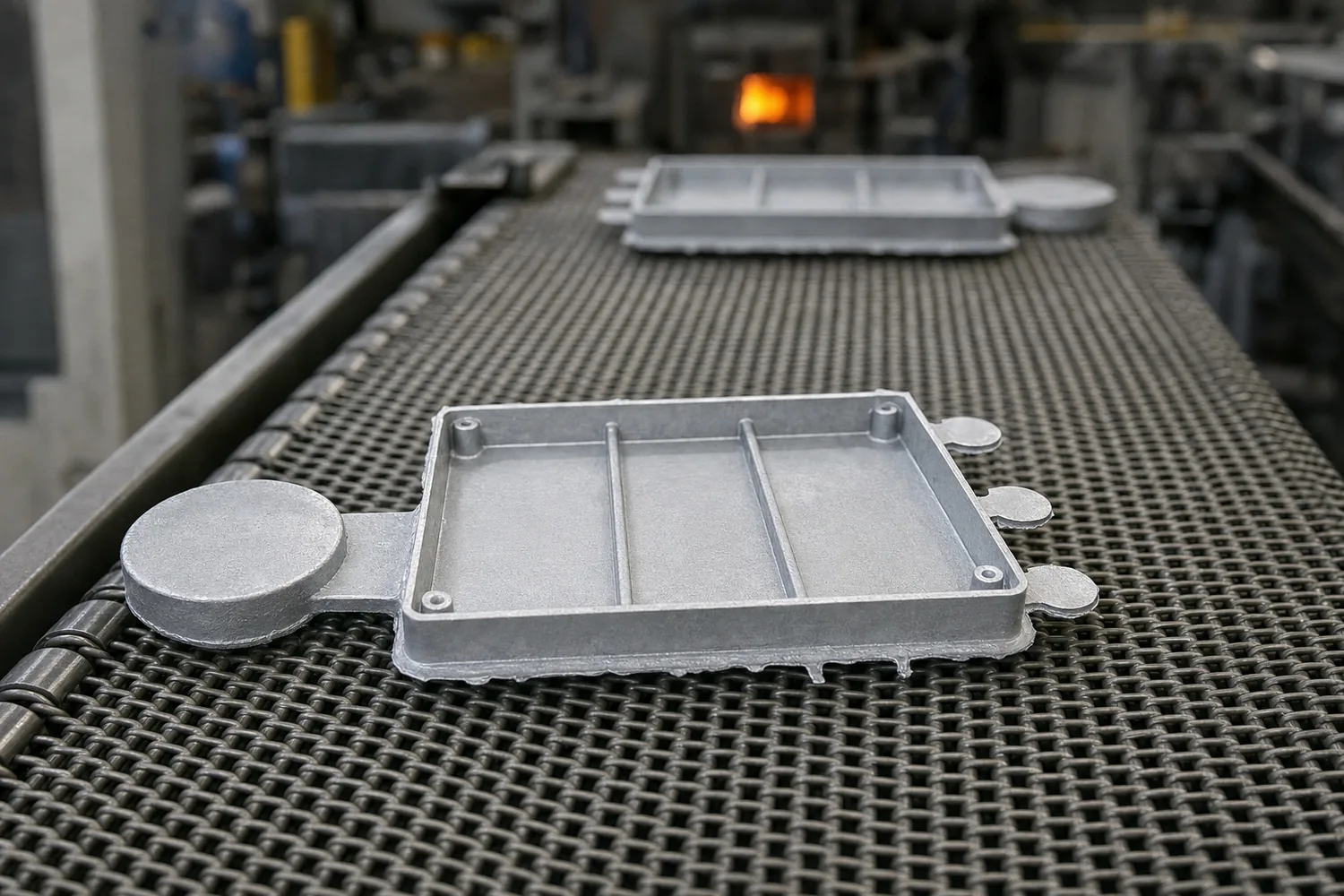
What the work includes
- Casting. Molten metal is injected into the die, sets and is ejected.
- Trimming. The runner, the overflows and the flash around the part are cut away, usually in a trim die.
- Secondary machining. Faces that mate with other parts are machined to size after casting.
- Surface finishing. The cast surface is cleaned and blasted, then powder coated or painted. Zinc parts are often plated.
What it makes and when to choose it
Complex metal housings, heat-sink bodies and frames.
The die is the most expensive tooling of the processes we cover and takes the longest to build, so die casting usually pays from about 5,000 to 10,000 parts a year. Before that, the first few hundred are usually machined.
Common materials
| Material | Chosen for |
|---|---|
| Aluminum A380 (ADC10) or A383 (ADC12) | The usual choices: they fill thin, complex shapes well, are strong for their weight and machine well. They need a coating where corrosion matters. |
| Zinc (Zamak 3) | Fine detail, thin walls and the best as-cast surface, for small parts. |
| Magnesium AZ91D | The lightest structural metal, where weight matters most. |
Finishes
Powder coat, paint or a conversion coating; plating on zinc. The usual aluminum casting alloys don't anodize to an even color.
Design guidelines for die casting
| Feature | Guideline |
|---|---|
| Wall thickness | Typically 1.5–3 mm for aluminum, and thinner for zinc. Keep walls even and as thin as the part allows, and change thickness gradually where it must change. Thick sections collect porosity. |
| Draft | 1–2° is usually enough for aluminum, and zinc can take less. Inside walls and cores need about twice the draft of outside walls, because the metal shrinks onto them. |
| Fillets | At least 1 mm, larger where the part carries load. No sharp corners: metal fills them poorly and cracks start there. |
| Ribs | About 70–80% of the wall they join. Add them to thin walls first, with room for die steel between them. |
| Bosses | Keep the wall around a boss even, core it out where it would be thick, and fillet its base. Leave room for die steel between bosses, and add ribs when a boss is taller than it is wide. |
| Undercuts | Avoid them, or design around them with pass-through openings. Each one left needs a slide in the die. |
| Holes | Keep the wall around a hole even, and keep holes away from sharp corners. Holes that locate other parts need the tightest control. |
| Threads | Cast the hole and tap the thread afterwards. |
| Parting line | Put it where it shows least, and keep critical features off it: dimensions across it need looser tolerances. |
| Surface finish | Agree the finish class before the die is designed. A cosmetic as-cast face shortens die life. |
| Porosity | Some porosity is normal inside a casting. Tell us which areas must be sound or pressure-tight before the die is designed. Machining can open pores under the dense skin, so parts that must hold pressure are often impregnated after machining. Standard die castings are not heat treated, because trapped gas blisters the surface. |
Frequently asked questions
Will Bluetooth or Wi-Fi work inside a metal enclosure?
Not through a closed metal box, which blocks radio signals. Put the antenna behind a plastic end cap or window, use an external antenna, or cut a slot designed as an antenna. Leave clearance around the module's antenna, decide where it goes before the enclosure is frozen, and test range and run the FCC tests in the real metal case.
What does IP67 mean?
IP67 is an Ingress Protection code from IEC 60529. The 6 means dust-tight; the 7 means the product survived 30 minutes with its lowest point 1 m under fresh water. It doesn't cover water jets, which are IPX5 and IPX6, and it says nothing about salt water, pool chlorine, soap or hot water.
Other processes
We work fromSTEP · IGES · STL · Drawings · Photos
Tell us what you're building and how many you plan to make.
A real person on our team will reply with a first look at your production run and a few times to talk.
Free first look. We reply within two business days. Sending a request doesn't commit you to a project.