CNC machining
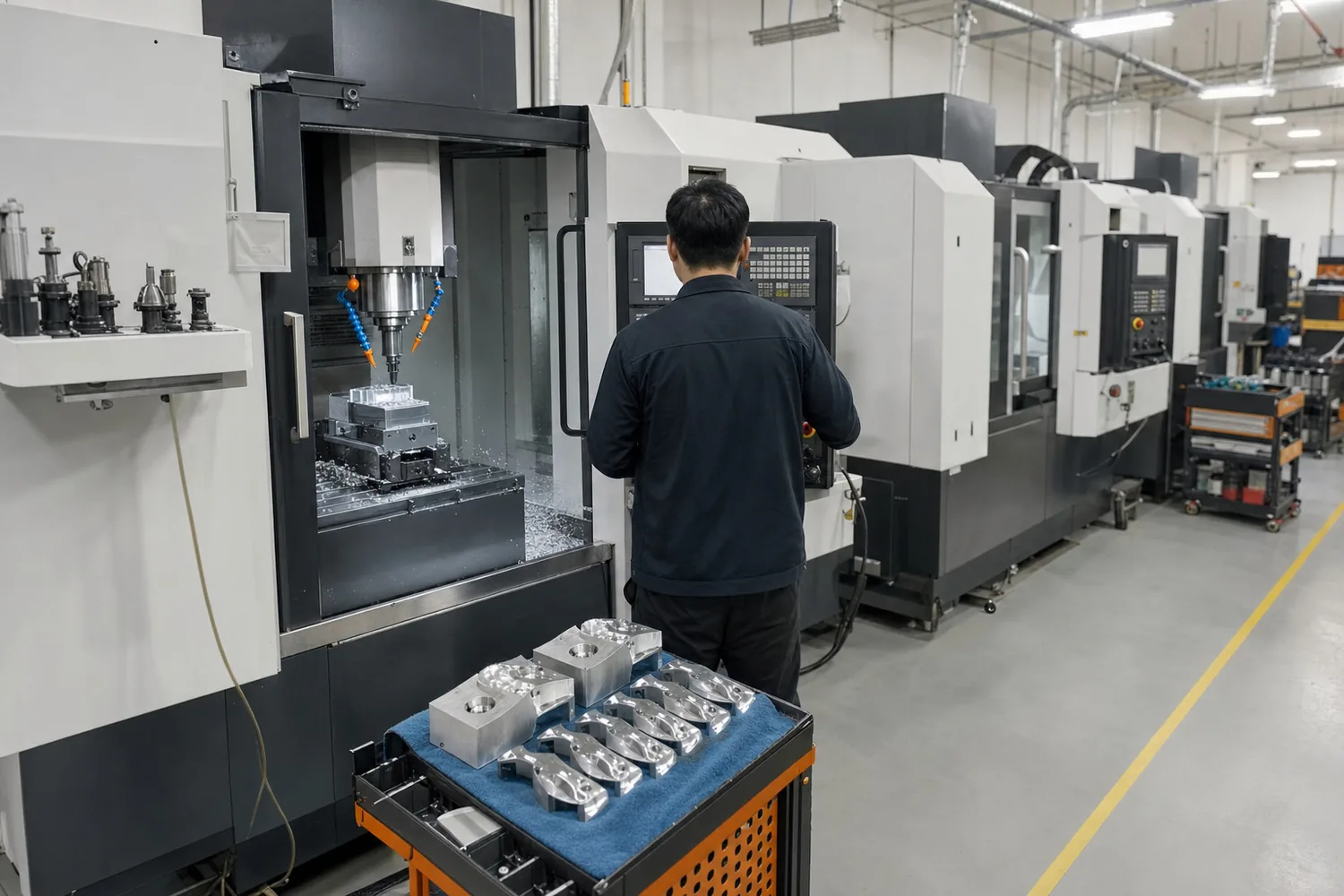
CNC machining cuts a part from a solid block of metal or plastic with computer-controlled tools. It needs no mold, and it holds tight dimensions.
What the work includes
- Milling. A spinning cutter removes material from a clamped block. It makes pockets, holes, threads, flat faces and contoured surfaces. Inside corners keep the radius of the cutter. Avoid undercuts, which need special cutters and add cost.
- Turning. The part spins against a fixed tool. It makes shafts and other round parts.
- Deburring and finishing. Sharp edges are broken by hand or in a tumbler. Anodizing and plating, and sometimes blasting, are done at a finishing shop, a separate step that small lots pay a minimum charge for. Choose the finish while you design the part.
- Inspection. The dimensions marked as critical on the drawing are measured, with a coordinate measuring machine (CMM) where the tolerance calls for one.
What it makes and when to choose it
Heat sinks, precise housings, shafts and mounts.
It needs no mold, so it can make a single part, and it fits when a part needs tight tolerances. The first part carries the programming and setup, so the price per part drops over the first few dozen. As the quantity grows, we check part by part whether another process would cost less.
Common materials
| Material | Chosen for |
|---|---|
| Aluminum 6061 | The default: it machines easily and anodizes well, for housings, brackets and heat sinks. |
| Aluminum 7075 | Nearly twice the strength of 6061, for parts that carry load. It costs more, resists corrosion less, is hard to weld and anodizes less evenly. |
| Stainless steel 304 or 316 | Corrosion resistance. 316 for salt water and chemicals. |
| POM (acetal) | Low friction and stable dimensions, for gears, sliders and bushings. |
| PEEK | Heat and chemical resistance where other plastics fail. |
| ABS or polycarbonate | Test parts for a design that will later be molded. |
Finishes
Aluminum: bead blasting and anodizing, or a conductive chemical film where the part must ground. Stainless steel: passivation or bead blasting. Plastics: usually left as machined.
Design guidelines for CNC machining
| Feature | Guideline |
|---|---|
| Inside corners | A cutter leaves a radius in every inside corner. Make the radius at least a third of the pocket's depth, and a little larger than the cutter's, so the tool turns the corner without stopping. A nearly sharp inside corner needs EDM. Where a square part must seat in the corner, add a relief cut instead. |
| Pockets | Keep a pocket no deeper than about four times its width. A cutter is rigid to about three or four times its diameter; deeper features need long tools that deflect and chatter, so they cut slowly and cost more. |
| Walls | About 0.8 mm or more in metal and 1.5 mm or more in plastic. Thinner walls vibrate under the cutter, and plastic ones warp from heat, so they hold dimensions poorly. |
| Holes | Use standard drill sizes. Keep the depth to about four times the diameter where you can; about ten times is possible with care. A drilled blind hole has a cone-shaped bottom; a flat bottom needs a milled hole. |
| Threads | Standard sizes from about M2 (#2) up are routine. Very small threads break taps more easily, so use M3 or larger where you can. Most of the load sits on the first few threads: about 1.5 times the diameter is enough in steel, about 2 times in aluminum. Leave an unthreaded length at the bottom of a blind hole. |
| Undercuts | Avoid them where you can. Where one is needed, such as a T-slot or an O-ring groove inside a bore, keep it to a standard cutter width and leave room for the tool. |
| Tolerances | Unless the drawing says otherwise, a shop works to its general tolerance, commonly around ±0.13 mm (±0.005 in) on metal, looser on plastics and on large dimensions. Tighten only the dimensions that must fit: each tight one adds machining time and inspection. |
| Surface finish | An as-machined face shows fine tool marks, at about 3.2 µm Ra (125 µin). Smoother faces, 1.6 or 0.8 µm Ra (63 or 32 µin), take extra passes and cost more, so call them out only on the faces that seal, slide or show. |
| Setups | Each time the part is turned over and clamped again adds cost and a small error between faces. Design features to be reached from as few sides as possible. A 5-axis machine reaches five sides in one clamping, but its hourly rate is higher. |
| Anodizing and fits | Anodizing adds an oxide layer, and part of it, up to about half, grows outward, so a hole gets slightly smaller and a shaft slightly larger. Hard anodizing (Type III) grows the most. On tight fits and threads, ask for masking or allow for the layer. |
| Drawing | A 3D model is enough to quote. Add a drawing for tight tolerances, threads and finishes, and mark the dimensions that matter most. |
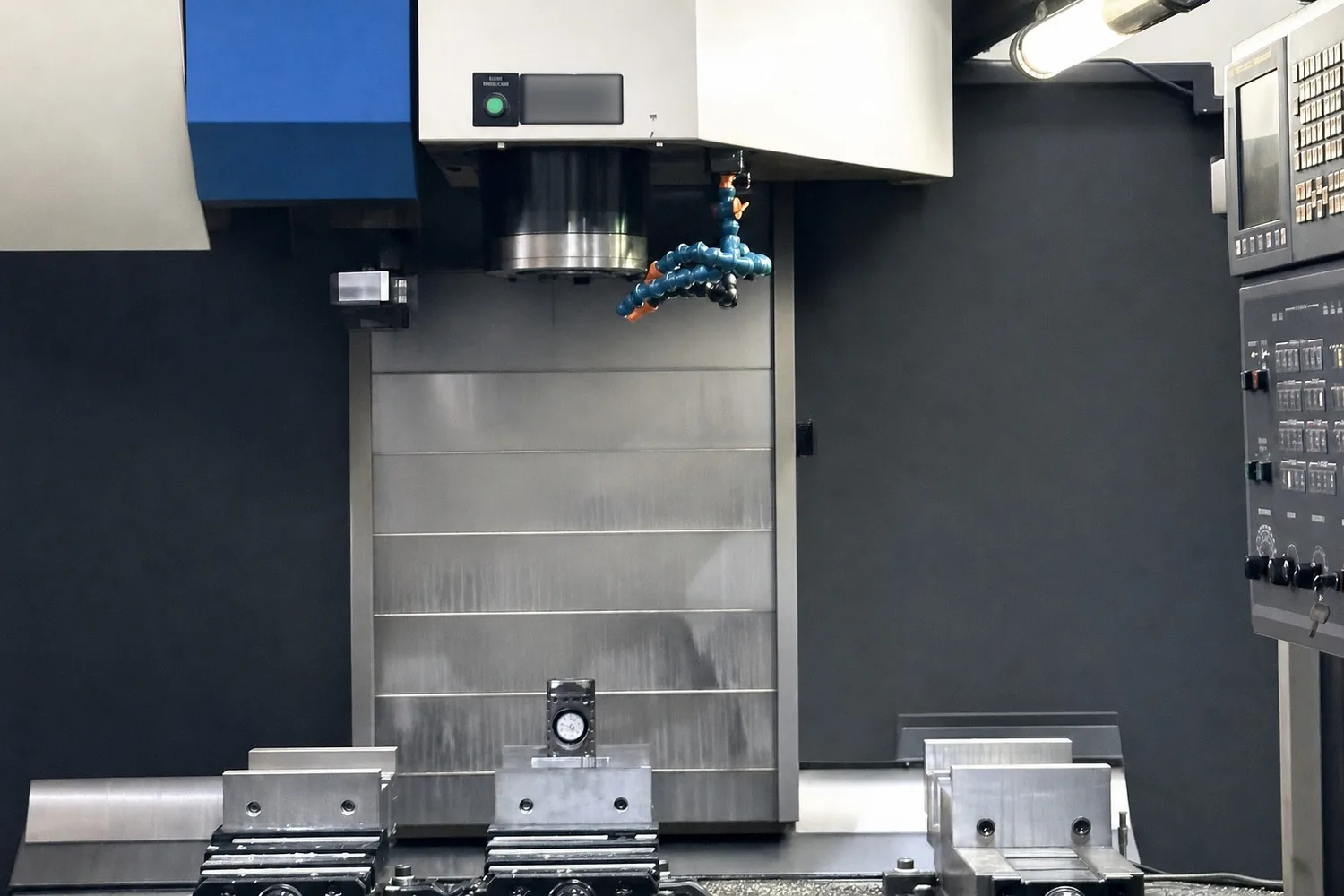
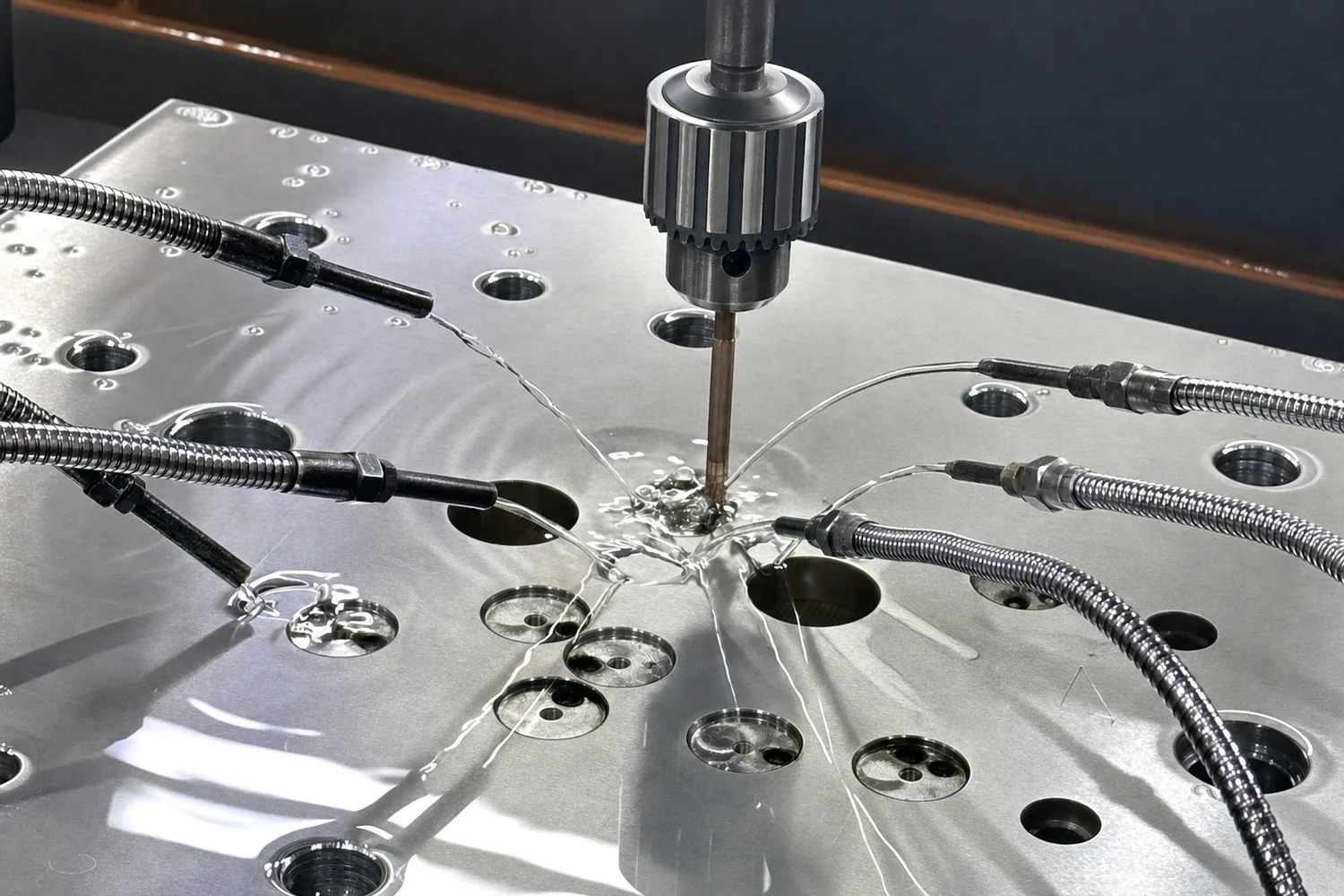
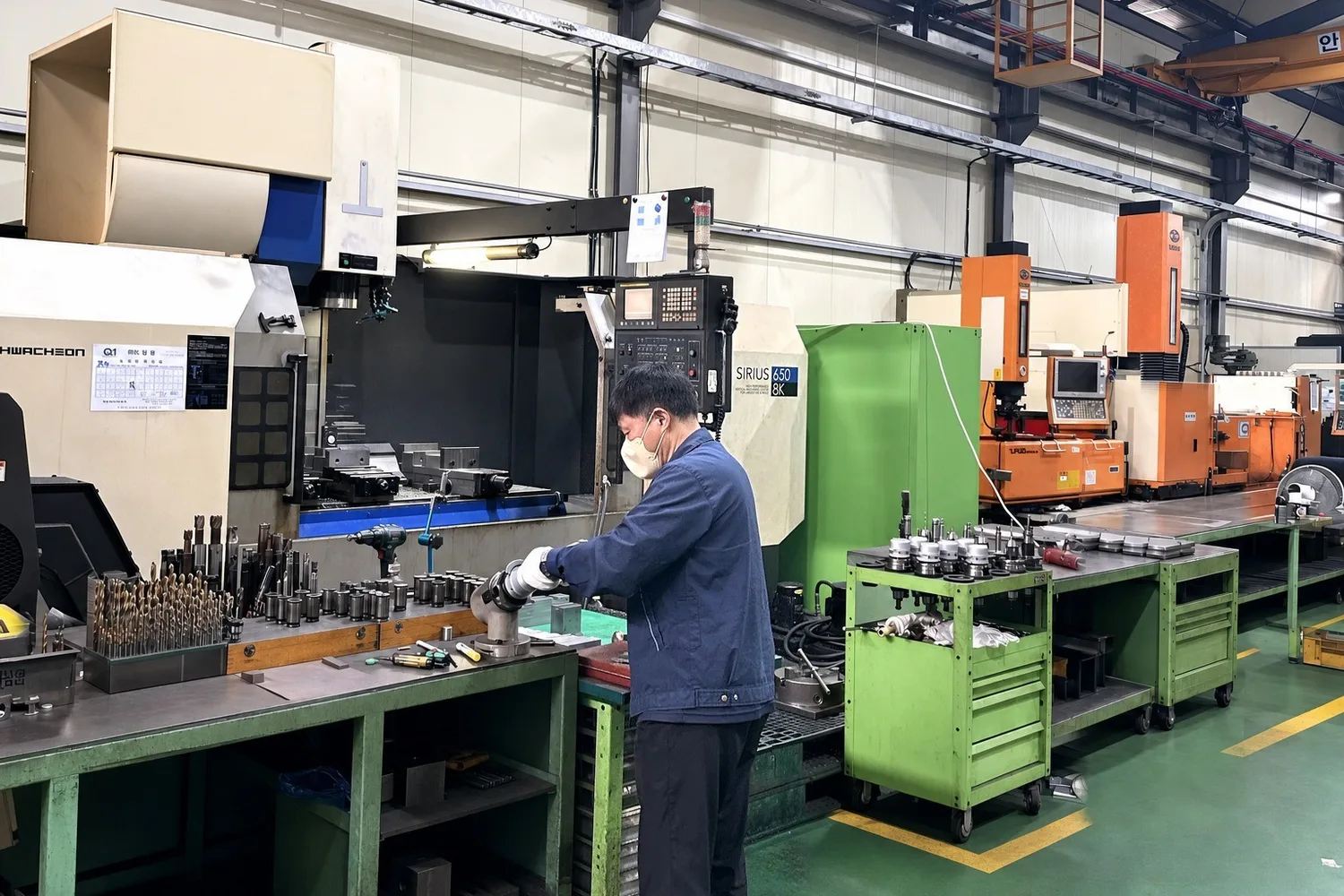
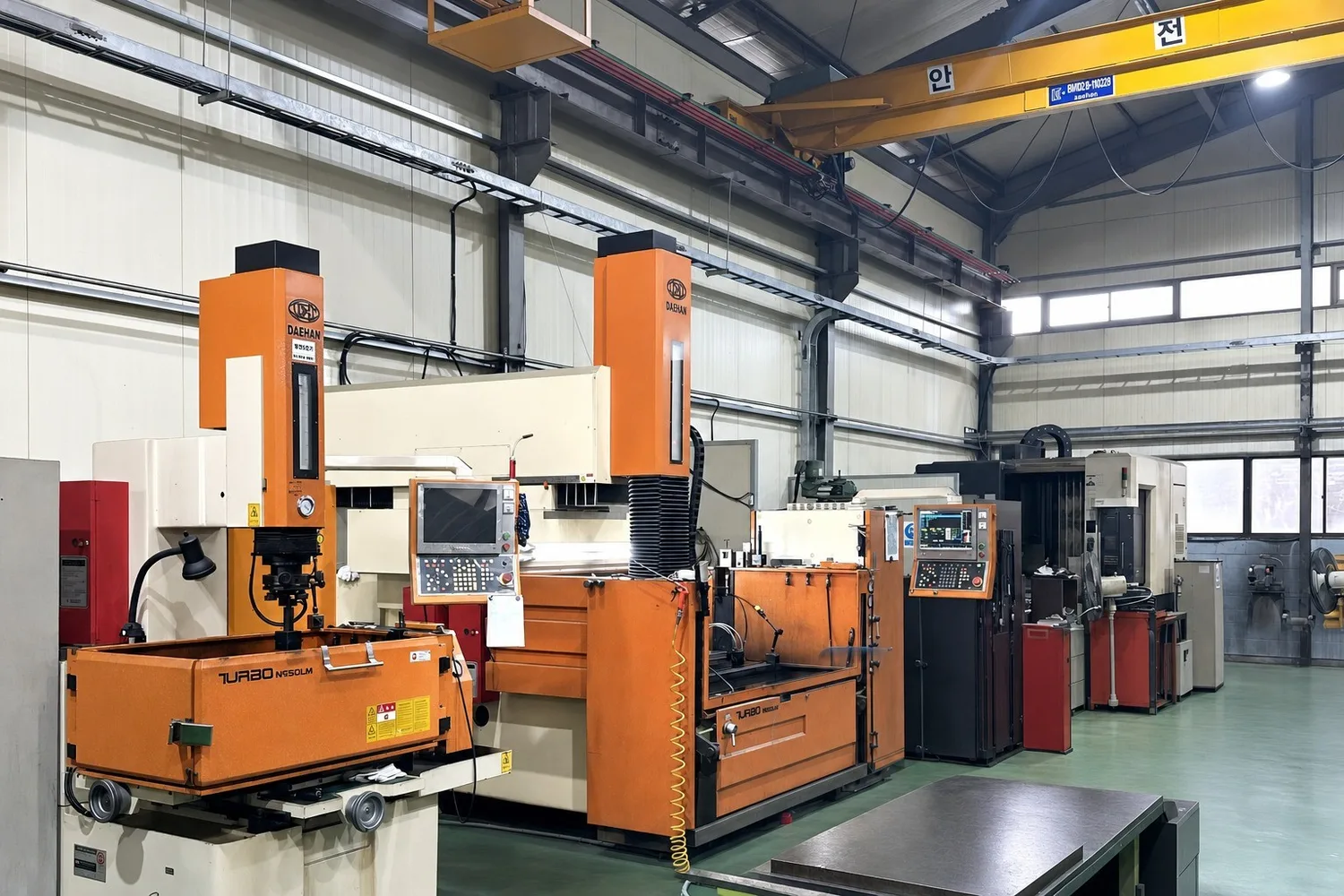
Photographs from the shop floor
Other machining processes
What a part may need beyond plain milling and turning.
- 5-axis milling. The tool or the part tilts, so five sides and angled features are cut in one clamping. For complex shapes and for tight positions between faces.
- Mill-turn. A lathe with driven tools turns a round part and mills its flats, cross holes and keyways in the same clamping.
- Wire EDM. A thin wire cuts through conductive metal with sparks. For very small inside corners (about 0.15 mm radius), narrow slots and hardened steel, on shapes that go all the way through.
- Sinker EDM. A shaped electrode burns a cavity that does not go through. For near-sharp inside corners and deep, narrow slots. It is slow, so it is kept for the features that need it.
- Grinding. An abrasive wheel takes off the last few tenths of a millimeter or less. For tighter sizes, flatter faces and finer finishes than cutting gives, and for hardened parts.
- Threaded inserts. Most threads are tapped or milled straight into the part. Where a screw is removed often, or the part is plastic or aluminum, a metal insert keeps the thread from wearing out.
Frequently asked questions
Is sheet metal or CNC machining cheaper for a small electronics enclosure?
At low volume, usually sheet metal. A bent two-part box needs no tooling, and online shops price a bent part about 120 to 165 mm on a side at $16 to $25 each for 100. A machined aluminum shell costs more, because every part needs machine time; it fits a few hundred units or a product whose look justifies it.
Can I use cast or machined parts for certification testing?
It depends on the test. A safety listing such as UL or ETL is tied to the listed grade of plastic and its wall thickness, so plan on molded parts in that grade. FCC emissions testing usually doesn't need the production plastic. For drop tests and snap fits, machined parts in the same family of plastic are a fair early check. Ask the test lab first.
Other processes
We work fromSTEP · IGES · STL · Drawings · Photos
Tell us what you're building and how many you plan to make.
A real person on our team will reply with a first look at your production run and a few times to talk.
Free first look. We reply within two business days. Sending a request doesn't commit you to a project.